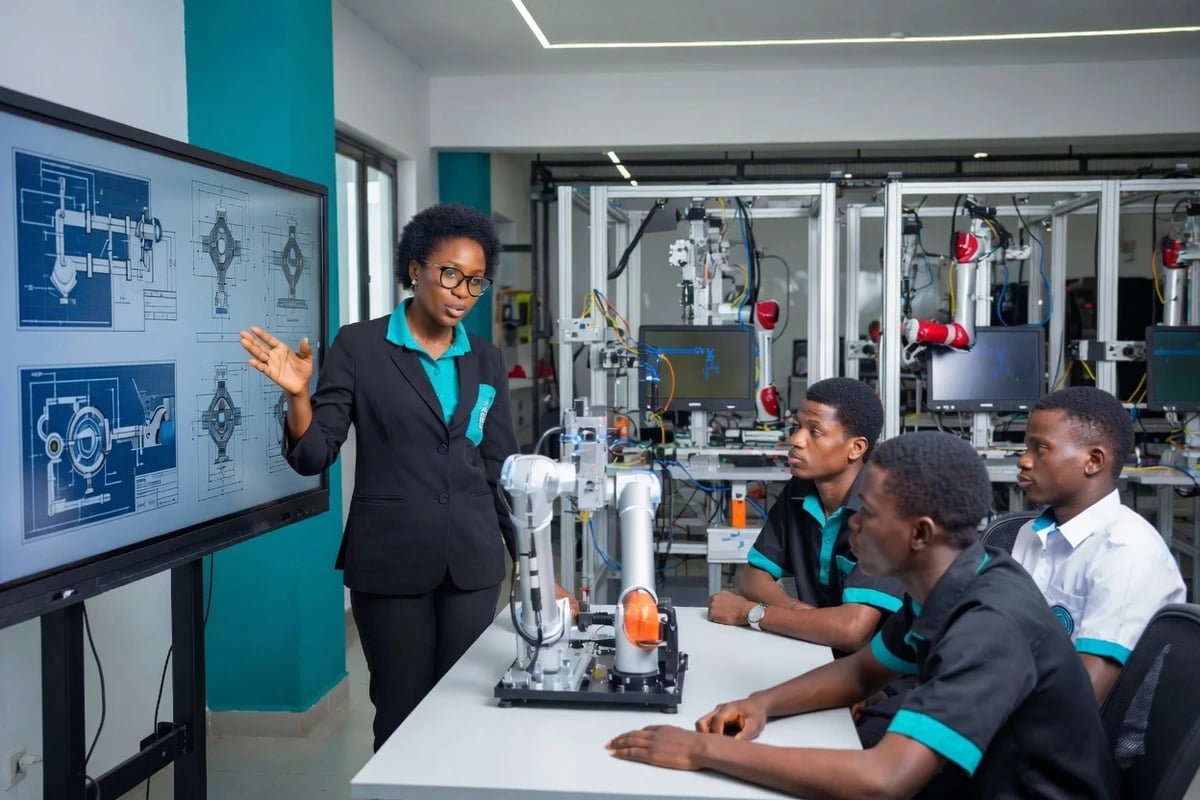
Training & Capability Building
Structured training programmes that build operator proficiency and maintenance capability for automated facilities, delivered to team size and shift patterns.
What is Training & Capability Building?
Training & Capability Building is a structured programme discipline through which organisations that have deployed or are planning to deploy automation acquire the internal human capacity to operate, sustain and continuously improve those systems. It is not a one-day orientation event — it is a sequenced, role-differentiated curriculum delivered against the actual equipment, software and workflow configurations in use at a given facility.
Manufacturers, logistics operators, food producers, healthcare facilities and research institutions across Ghana and Togo specify this service when they recognise that technology adoption without capability transfer creates a dependency gap. A system commissioned without a proficient team behind it degrades faster, costs more to support, and fails to deliver the productivity gains the investment was designed to unlock. Training & Capability Building closes that gap with precision. To be clear: this builds your team’s capability to run an automated facility — it is not a public robotics school, a STEM programme, or robotics education for the general public.
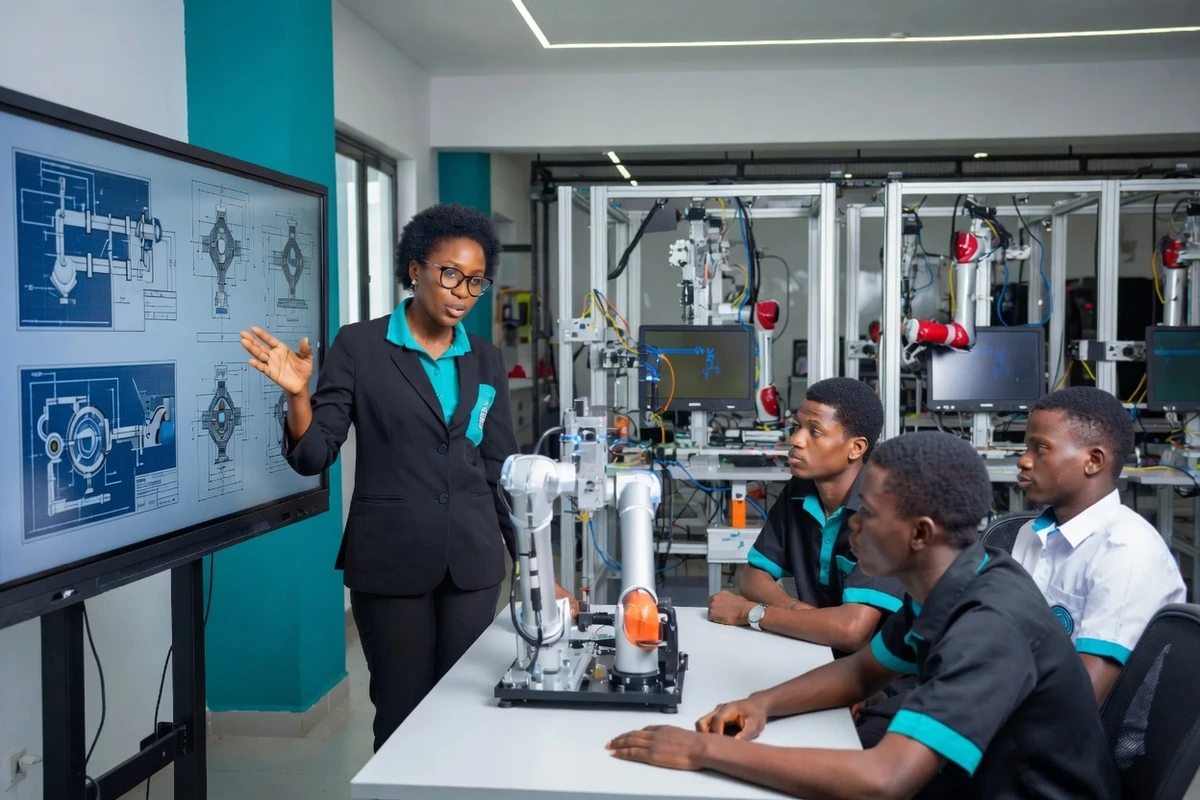
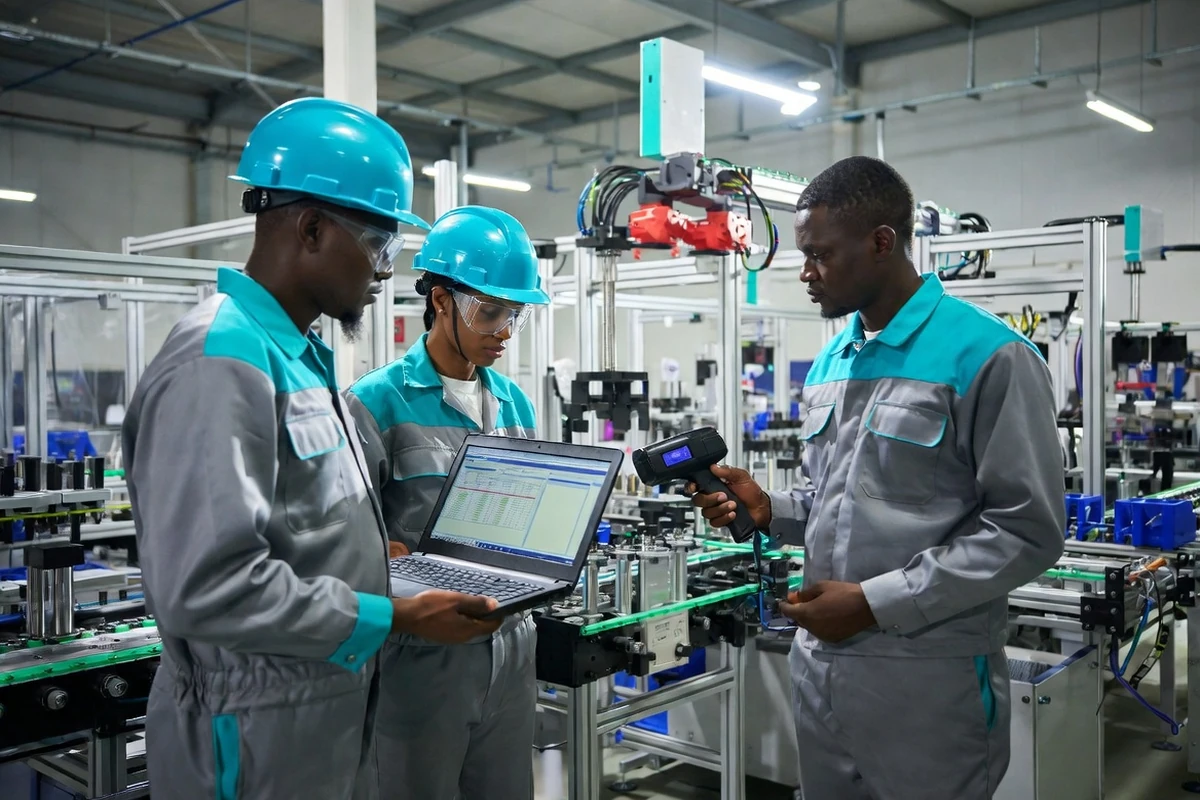
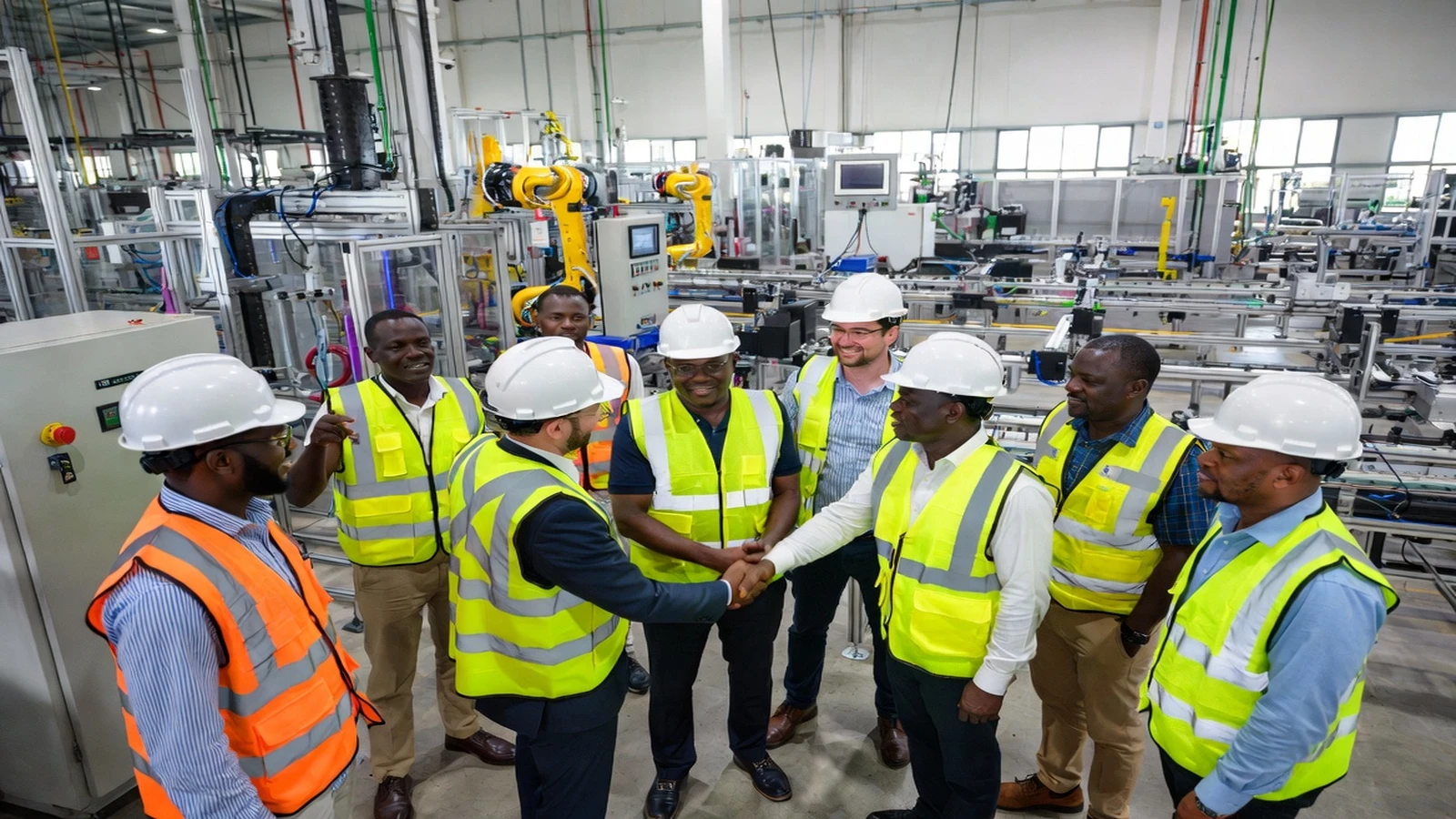
When to Specify Training & Capability Building
This service is appropriate at three distinct inflection points: pre-commissioning, at go-live, and during post-deployment capability refresh cycles. Pre-commissioning training prepares operator and maintenance teams before equipment enters production, reducing early-stage errors and shortening the ramp-up period. Go-live training embeds process discipline at the moment it matters most. Periodic capability refresh cycles address team turnover, system upgrades and evolving operational complexity.
Sectors that draw most heavily on this programme include food and beverage processing facilities introducing line automation, pharmaceutical and healthcare facilities adopting regulated-environment robotics, manufacturing operations onboarding programmable logic controllers or automated inspection systems, and logistics hubs deploying sortation or warehouse management technologies across Ghana and Togo.
Methodology — The RoboHub Africa Specialist Approach
-
Needs Assessment and Role Mapping — Specialists conduct a structured review of the organisation’s operational structure, shift patterns, team sizes, existing technical literacy and the specific automation systems deployed or planned. Training scope is defined by role — operator, supervisor, maintenance technician — not by generic module catalogue.
-
Curriculum Design — A bespoke training curriculum is developed against the client’s actual system configuration. Theoretical content, hands-on practical sequences and assessment checkpoints are built around the equipment and software the team will work with daily.
-
Delivery Scheduling — Programme delivery is structured around the client’s shift patterns and production calendar. Sessions are staged to avoid operational disruption, with cohort sequencing that ensures full team coverage without pulling critical personnel off the floor simultaneously.
-
Practical Skills Transfer — Hands-on training is conducted on live or near-live system configurations where feasible, supplemented by scenario-based exercises that replicate the fault conditions, maintenance routines and process adjustments teams will encounter in real operations.
-
Competency Verification and Documentation — Each participant is assessed against defined competency benchmarks. Outcomes are documented and a training record is issued per individual, giving facility management a verifiable capability register that supports compliance, audit readiness and ongoing workforce planning.
Programme Scope & Standards
- Role-differentiated curricula: operator, supervisor, maintenance and engineering tracks
- Delivery calibrated to client shift patterns and team size — no off-the-shelf cohort schedules
- Practical training conducted against client-specific system configurations and SOPs
- Assessment-based completion with documented competency records per participant
- Ongoing refresher programmes available for system upgrades, team onboarding cycles and process changes
- Delivered across Ghana and Togo by specialists with demonstrated automation deployment backgrounds
Outcomes & Continuity
Organisations completing a Training & Capability Building programme carry a measurable reduction in operator error rates, faster fault identification by maintenance teams and reduced dependence on external support for routine system management. The investment in structured capability transfer compound over time — as teams grow more proficient, the organisation extracts progressively greater value from its automation assets.
Continuity provision is built into every engagement. Clients access structured refresher modules as systems evolve, as new personnel join, and as operational complexity scales. Capability building is not a project with an end date — it is an ongoing institutional asset.
Advisory to Standard
- We build operator and maintenance capability to recognised practice — IEC 61131-3, ISO 10218-2 / ISO 12100, IEC 61508 / IEC 61511 (functional safety / SIL), IEC 61439, ISA-95 and IEC 62443 (OT cybersecurity) — described as the framework we train to, with certifications claimed only where actually held, and within Ghana’s Factories, Offices and Shops Act 1970 (Act 328) / DFI safety regime
- Vendor-neutral — we build your team’s capability on the systems you run, not a single vendor’s product
- Established 2020 — capability transfer for your facility’s own teams, not a public robotics school, STEM programme, or robotics-education provider
Related Services
- Automation Readiness Assessment — where training scope often originates
- Robotics Enablement & Deployment — the commissioning phase this supports
- Systems Integration — the integrated systems your team will operate
- Managed Automation Support — ongoing continuity after internal capability is built
- Custom Automation Provisioning — the solution your team is trained to run
- Industrial Automation Advisory & Managed Support — the full programme
What It Costs — Honestly
A capability-building programme is scoped and quoted per engagement — programme length, role tracks, team size and shift coverage all vary, so there is no flat published rate. We quote against your actual requirement, never an invented figure.
Book a readiness assessment — or request an automation advisory: +233 20 531 3333.