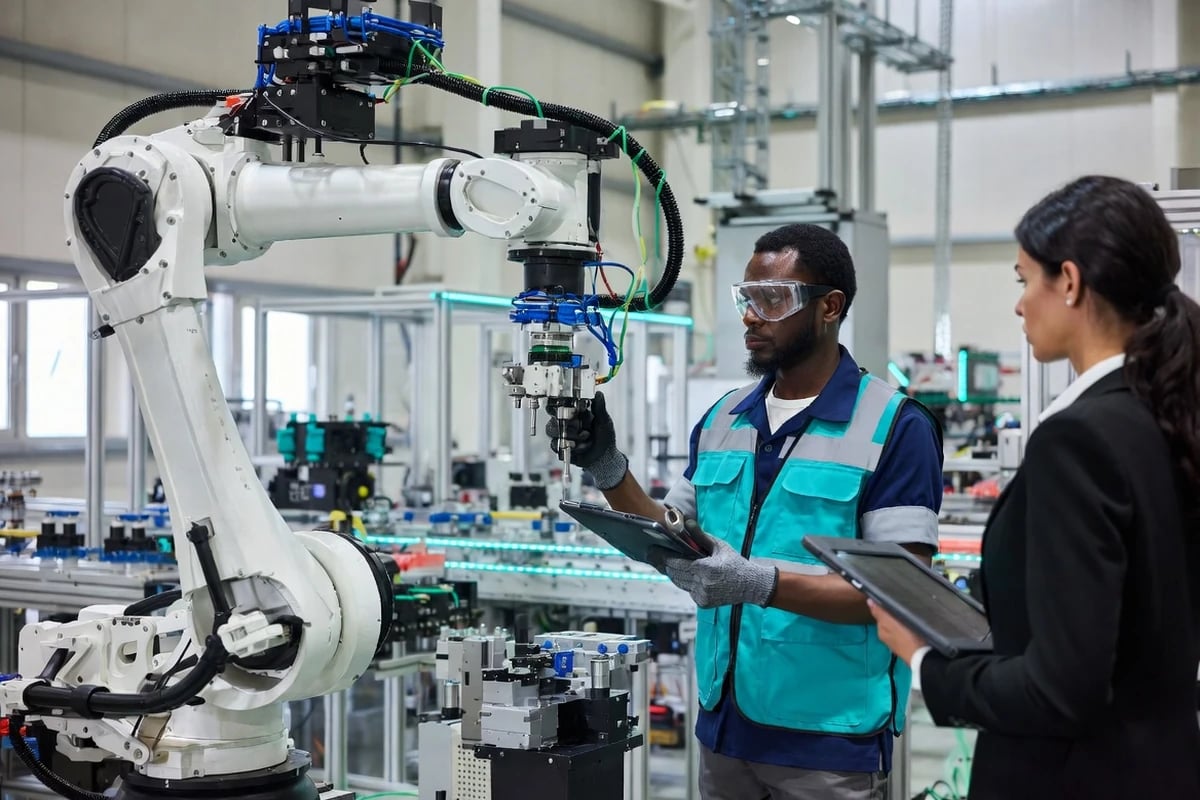
Automation Maintenance
Scheduled and responsive maintenance for automated systems, covering mechanical, electrical and software elements to sustain operational uptime.
What is Automation Maintenance?
Automation maintenance is the lifecycle-support side of industrial automation — and to be clear before anything else: RoboHub Africa advises on, sources and supports automation systems vendor-neutrally — it is not a consumer-robotics, robotics-education or RPA-software vendor. We keep deployed automation at peak condition for manufacturers and institutions across Ghana and Togo. Book a readiness assessment — or request an automation advisory: +233 20 531 3333.
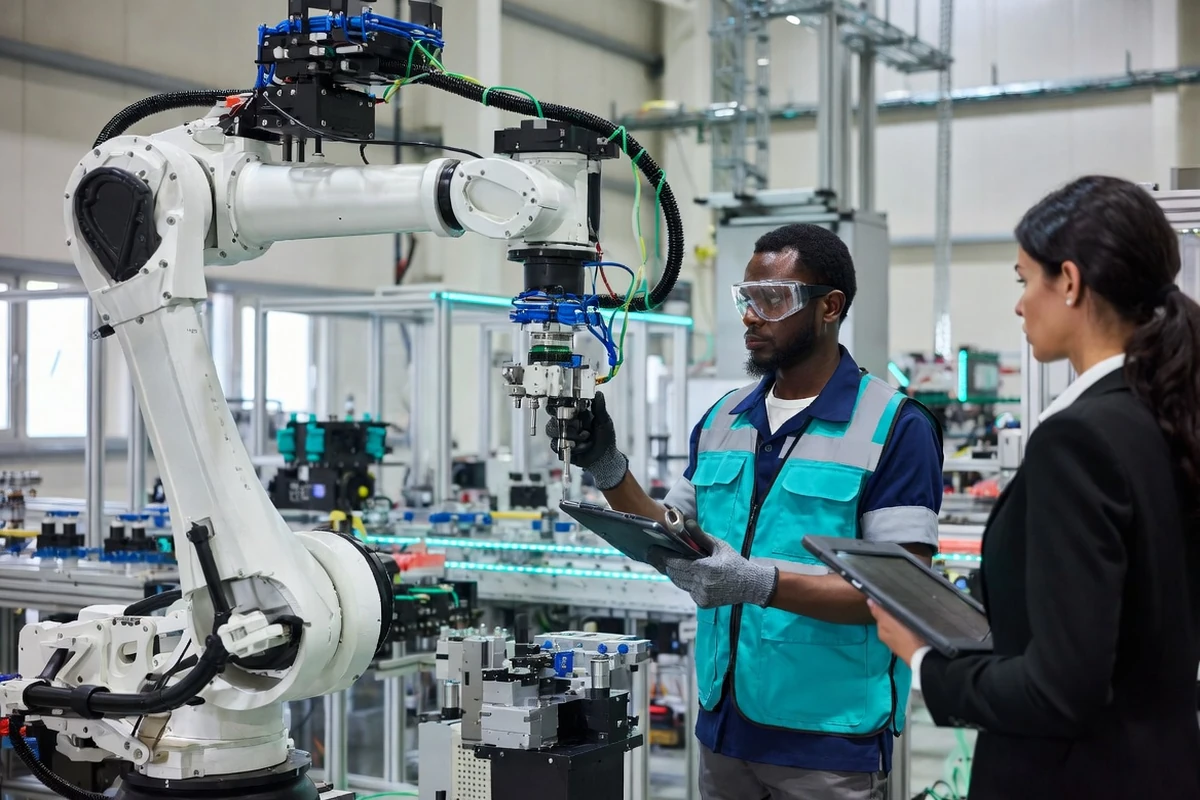
Automation maintenance is the structured discipline of sustaining automated systems at peak operational condition through scheduled servicing, responsive fault resolution, and systematic software upkeep. It encompasses the full scope of a deployed automation environment — mechanical actuators, sensor arrays, control panels, PLCs, conveyor mechanisms, collaborative robotic cells, and the software layers that govern them. Rather than responding to failure after it occurs, well-specified maintenance programmes anticipate degradation patterns and intervene before operational continuity is compromised.
Organisations that commission automation infrastructure in Ghana and Togo — manufacturers, food processing facilities, pharmaceutical operations, logistics hubs, and research institutions — routinely specify ongoing maintenance support as an integral part of their automation strategy. The complexity of modern automated environments demands a maintenance partner with deep systems familiarity, not generic electrical contractors or in-house technicians operating beyond their domain competence.
When to Specify Automation Maintenance
Automation maintenance becomes critical the moment a facility transitions from pilot deployment to full production reliance. Any operation where downtime carries measurable cost — assembly lines, temperature-controlled storage systems, automated packaging, warehouse sortation, or laboratory automation — warrants a formalised maintenance programme rather than ad hoc response.
Sectors operating in Ghana’s industrial corridors and Togo’s growing logistics and manufacturing base are particularly exposed to the consequences of deferred maintenance: humid coastal conditions, fluctuating power supply, and the accelerated duty cycles common to lean-staffed facilities all compound equipment wear. Proactive maintenance scheduling, adapted to local environmental realities, is the instrument that converts capital investment in automation into sustained operational return.
Methodology — The RoboHub Africa Specialist Approach
-
Systems Audit and Baseline Establishment — Specialists conduct a comprehensive audit of all deployed automation assets, documenting mechanical condition, software versions, calibration status, and historical fault logs to establish a reliable baseline from which maintenance scheduling is designed.
-
Maintenance Programme Specification — A structured maintenance calendar is developed, aligning service intervals with the manufacturer’s guidance, operational load patterns, and the client’s production schedule — minimising planned downtime to pre-agreed maintenance windows that do not interrupt critical throughput.
-
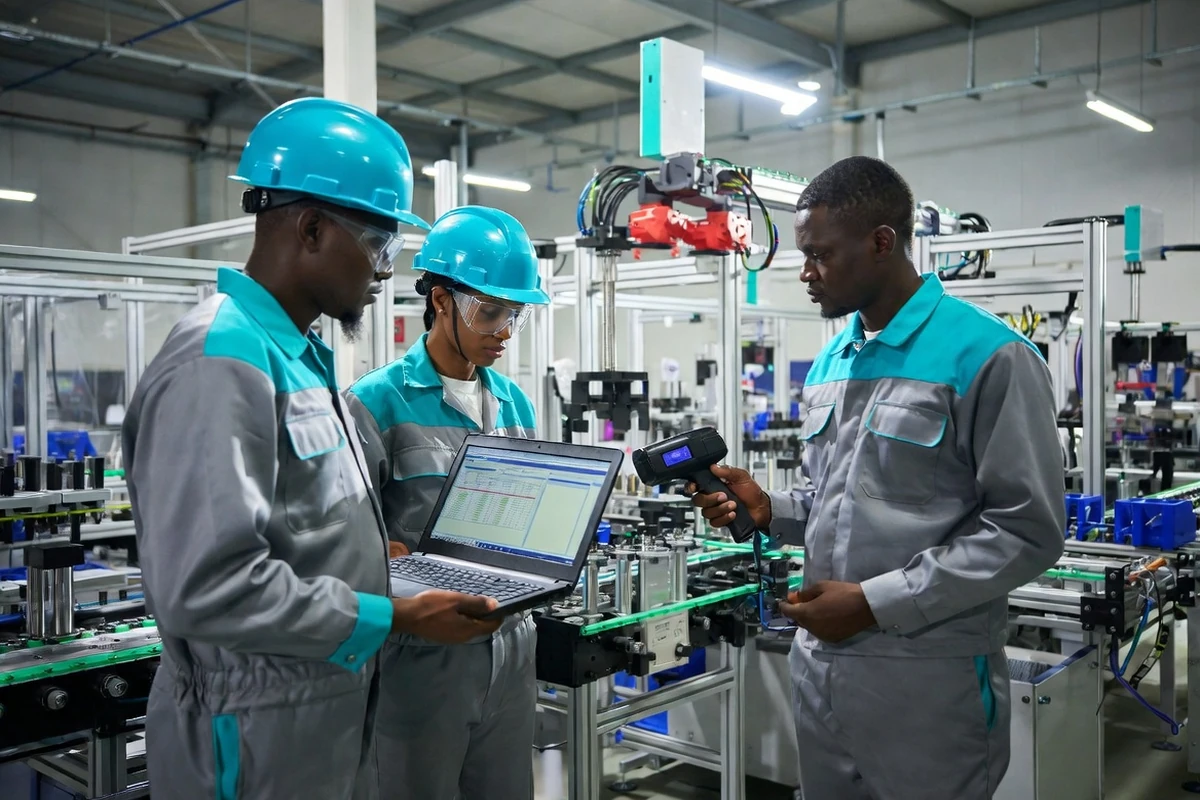
Scheduled Preventive Servicing — At each interval, specialists carry out mechanical lubrication, component inspection, sensor calibration, firmware and software updates, cable and connector integrity checks, and safety relay testing — restoring every element of the system to within its operational specification.
-
Responsive Fault Resolution — When unplanned faults arise, the client contacts RoboHub Africa through a designated support channel. Specialists diagnose remotely where feasible and mobilise on-site when physical intervention is required, working systematically from fault identification through root-cause resolution.
-
Documentation and Continuous Improvement Reporting — Every service visit and fault response is documented. Periodic reporting surfaces wear trends, recurring fault patterns, and opportunities to adjust maintenance intervals or recommend component upgrades — ensuring the programme evolves alongside the system’s operational history.
Service Standards & Disciplines Covered
- Mechanical and electromechanical inspection across robotic cells, actuators, and conveyor systems
- PLC, SCADA, and HMI software version management and integrity verification
- Sensor calibration and feedback loop validation across all automated process points
- Electrical safety checks encompassing control panels, wiring integrity, and earthing continuity
- Environmental condition monitoring relevant to Ghana and Togo’s humidity and power-quality profiles
- Structured fault documentation supporting warranty claims and lifecycle planning
Outcomes Clients Can Expect
Organisations that sustain a formalised automation maintenance programme with RoboHub Africa retain the operational reliability their initial automation investment was specified to deliver. Degradation is intercepted before it cascades into unplanned downtime. Software environments remain current, secure, and aligned with evolving process requirements. Maintenance history is documented with the rigour that procurement auditors, insurers, and institutional governance frameworks require. The result is a system that performs as designed — not one that slowly diverges from its commissioning specification as months pass without structured attention.
Related Sectors and Solutions
Automation maintenance sits within RoboHub Africa’s broader advisory and managed support practice. Clients who specify maintenance programmes frequently draw on related capabilities including advisory, managed support and capability-building to build in-house resilience alongside specialist-managed continuity.
Related Services
- Managed Automation Support — the governed support programme
- Automation Readiness Assessment — decide before you build
- Training & Capability Building — in-house resilience
- Industrial Automation Advisory & Managed Support — the full advisory + lifecycle picture
Advisory to Standard
- We maintain to recognised practice — IEC 61131-3, ISO 10218-2 / ISO 12100, IEC 61508 / IEC 61511 (functional safety / SIL) and IEC 62443 (OT cybersecurity) — described as the framework we work to, with certifications and OEM-partner badges claimed only where actually held, and within Ghana’s Factories, Offices and Shops Act 1970 (Act 328) / DFI safety regime
- Vendor-neutral — our servicing serves your interest, not a single vendor’s
- Established 2020 — a real automation advisory & managed-support partner, not a consumer-robotics or software-RPA vendor
- A maintenance programme is scoped and quoted per engagement — there is no flat published rate, and we never quote an invented figure