Why Commercial Properties and Facilities Specify RoboHub Africa
Commercial properties and facilities operations carry a distinct operational burden: assets must perform continuously, access must be governed precisely, and building systems must respond to shifting occupancy patterns without manual intervention at every juncture. Facility managers, property developers, and operations leads across Ghana and Togo increasingly recognise that reactive, labour-intensive building management is a structural inefficiency — not a cost-of-doing-business. RoboHub Africa provides the advisory clarity and deployment capability to move facilities from manual dependence toward intelligent, automated operations.
The commercial property sector demands automation that integrates across disparate systems — HVAC scheduling, access control, visitor management, energy monitoring, and workflow orchestration — rather than isolated point solutions. RoboHub Africa’s approach begins with a structured advisory engagement, mapping the facility’s current operational state against its capacity and compliance requirements, then building an automation roadmap that is sequenced, prioritised, and scoped for the operational realities of Ghana and Togo’s commercial infrastructure environment.
Specification Requirements Unique to Commercial Properties and Facilities
Facilities automation in the commercial sector must account for multi-tenancy complexity, where a single property hosts multiple organisations with differentiated access rights, reporting requirements, and operational schedules. Systems must be configured to maintain tenant privacy and operational separation while still enabling the property owner or facilities manager to retain centralised visibility across the full asset.
Power reliability and connectivity infrastructure in Ghana and Togo introduce further specification considerations. Automation solutions deployed in commercial facilities must be resilient to grid variability, with failover logic and offline capability built into access management and critical building system controls. Any automation specification that does not account for local infrastructure conditions is incomplete. RoboHub Africa’s advisory process surfaces these constraints at the scoping stage — before deployment commitment is made.
Recommended Services for Commercial Properties and Facilities
- Facilities Automation Advisory — structured consultation to assess current building systems, identify automation opportunities, and produce a sequenced deployment roadmap aligned to the facility’s operational profile
- Access and Visitor Management Automation — configuration and deployment of automated access control, credential management, and visitor workflow systems for multi-tenant and high-traffic commercial environments
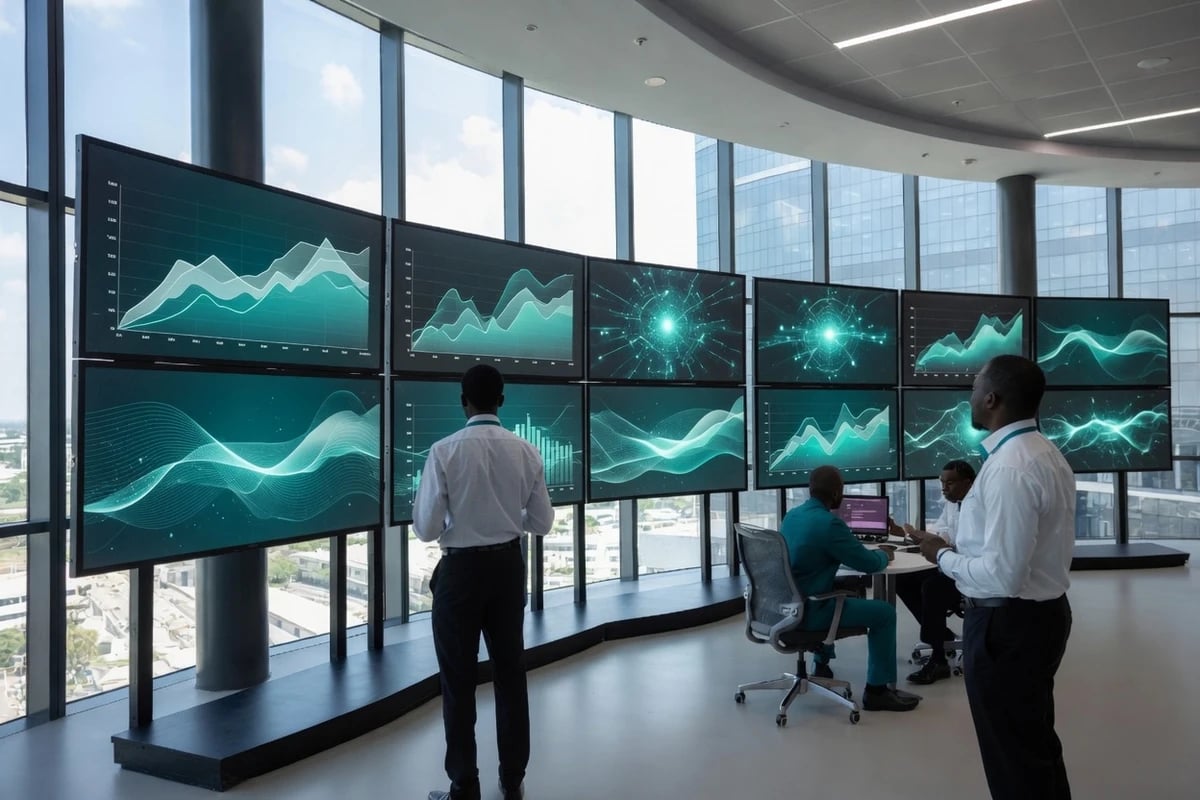
- Building Systems Integration and Orchestration — connecting HVAC, lighting, energy monitoring, and occupancy systems into a unified operational layer with centralised dashboards and automated scheduling logic
- Workflow Automation for Facilities Operations — digitising maintenance request routing, vendor management, compliance documentation, and periodic inspection workflows to reduce manual coordination overhead
- Managed Automation Support — ongoing monitoring, performance review, system optimisation, and specialist support to sustain automation capability as the facility’s operational requirements evolve
Notable Project Types
RoboHub Africa has developed automation programmes for commercial property types that range from multi-floor office complexes in Accra’s central business district to mixed-use developments combining retail, hospitality, and professional office accommodation. In these engagements, the scope typically encompasses access governance across multiple tenant zones, integration of building management systems that were historically siloed, and the establishment of automated reporting cadences that give facilities leads real-time operational visibility without manual data assembly.
Logistics and warehousing facilities operating within commercial property portfolios present a further pattern — where loading dock scheduling, inventory zone access, and shift-based workflow automation must be coordinated with the broader building management layer. RoboHub Africa approaches these projects with a systems-integration mindset, ensuring that automation deployed within operational sub-units communicates coherently with the overarching facilities management framework.
Compliance and Operational Standards
- Automation configurations aligned to the facility’s statutory access and security obligations under Ghanaian property and safety frameworks
- Data governance practices appropriate for multi-tenant environments, ensuring tenant operational data is partitioned and appropriately protected
- Offline and failover capability built into all access management and critical building system automation to address grid variability in Ghana and Togo
- Documented change management protocols so facilities teams retain operational understanding of automated systems rather than dependency without comprehension
- Periodic performance and compliance reviews structured into managed support engagements to ensure automation remains aligned to the facility’s evolving regulatory and operational requirements
- Vendor-neutral advisory stance, ensuring automation recommendations are based on operational fit rather than supply-chain preference
Automation Advisory for Commercial & Facilities
RoboHub Africa’s role in this sector is to advise, enable, source and support — we assess the facility’s current state, advise what is worth automating and in what order, source the right building and access systems vendor-neutrally, and keep them running. We are not a consumer-robotics, robotics-education or software-RPA vendor; this is the advisory and lifecycle side of physical building and facilities automation for commercial and mixed-use properties across Ghana and Togo.
Related Services
- Industrial Automation Advisory & Managed Support — the full advise-enable-source-support programme
- Automation Readiness Assessment — decide before you build
- Technology Sourcing & Fulfilment — the right system + partners, vendor-neutral
- Robotics Enablement & Deployment — building-systems and access enablement
- Managed Automation Support — SLAs, preventive maintenance, uptime
Advisory to Standard
We advise and support to recognised practice — building-systems integration and OT-security frameworks (e.g. IEC 62443) described as the framework we work to, with certifications and OEM-partner badges claimed only where actually held — and within Ghana’s Factories, Offices and Shops Act 1970 (Act 328) / DFI safety regime. Our advice and sourcing are vendor-neutral, serving your interest rather than a single supplier’s. Engagements are scoped and quoted per requirement — never an invented figure.
Book a readiness assessment — or request an automation advisory: +233 20 531 3333.