
Automation Readiness Assessment
Structured assessment of an operation's readiness for automation — process mapping, gap analysis, prioritisation and a phased roadmap aligned to capacity and budget.
To be clear before anything else: RoboHub Africa runs an industrial automation readiness assessment — a structured diagnostic to decide what is worth automating — not consumer robotics, robotics education, or RPA software. If you search for someone to tell you honestly whether automation is the right investment, in what order, and at what realistic cost, this is that engagement — for manufacturers and institutions across Ghana and Togo, since 2020. Book a readiness assessment — or request an automation advisory: +233 20 531 3333.
What is an Automation Readiness Assessment?
An Automation Readiness Assessment is a structured diagnostic engagement that establishes precisely where an operation stands before any automation investment is committed. RoboHub Africa specialists map current workflows, identify process inefficiencies, evaluate infrastructure constraints, and produce a prioritised gap analysis against the automation outcomes the organisation intends to achieve. The result is not a generic report — it is a decision-grade document built around the specific realities of the facility, team, and operational budget in question.
This service is specified by operations leadership, plant managers, and logistics directors who recognise that automation deployment without diagnostic rigour creates costly misalignment. It is equally relevant to organisations exploring automation for the first time and to those seeking to rationalise or extend automation that has already been partially deployed.
When to Specify an Automation Readiness Assessment
This assessment is appropriate at any point where capital allocation for automation is under consideration but the organisation lacks an evidence-based baseline. Manufacturers scaling production lines in Ghana’s industrial zones, food producers introducing consistency controls, healthcare facilities evaluating laboratory or logistics automation, and freight operators managing inbound-outbound throughput in Accra and Lomé all benefit from structured readiness evaluation before vendor conversations begin.
It is also the correct starting point following a failed or stalled automation initiative — where previous deployments fell short of operational goals and leadership requires an independent diagnostic to identify root causes and define a credible forward path.

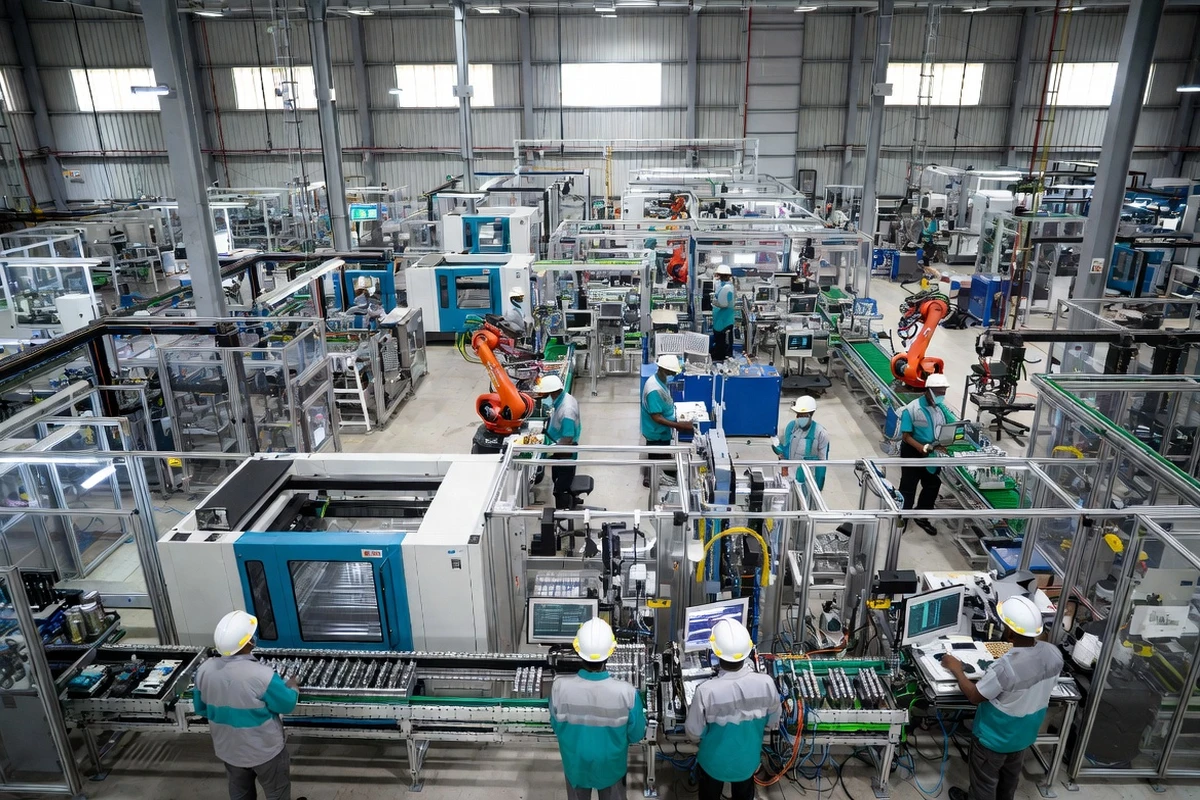

Methodology — The RoboHub Africa Specialist Approach
-
Scoping Consultation — A structured brief is established with the client’s operations and finance stakeholders, defining the automation objectives, constraints, regulatory environment, and decision timeline. This scoping session anchors every subsequent step to organisational strategy rather than technology preference.
-
Process Mapping and Workflow Audit — RoboHub Africa specialists conduct on-site observation and documentation of current workflows, cycle times, handoff points, and failure modes across the operational units in scope. Where sites span multiple locations across Ghana or Togo, remote documentation protocols supplement physical observation.
-
Gap Analysis and Constraint Identification — Mapped workflows are evaluated against automation-readiness criteria: data availability, infrastructure adequacy, workforce capability, and process standardisation. Gaps are categorised by severity and their implications for deployment complexity are clearly articulated.
-
Prioritisation and Phasing — Findings are structured into a phased roadmap that sequences automation initiatives by impact potential, implementation feasibility, and capital demand. High-readiness, high-value processes are identified for early phases; foundational gaps requiring remediation before deployment are assigned to preparatory workstreams.
-
Assessment Report and Briefing — A decision-grade report is delivered and presented to the client’s leadership team, providing a shared factual basis for investment decisions, vendor evaluations, and internal capability planning.
Scope and Standards — The Assessment Framework
- Process documentation against operational realities — not vendor templates
- Gap analysis structured across infrastructure, data, workforce, and process dimensions
- Phased roadmap aligned to the client’s actual capital cycle and operational calendar
- Independent framing — assessment conclusions are vendor-neutral and technology-agnostic
- Applicable across manufacturing, logistics, food production, healthcare, and research verticals in Ghana and Togo
- Delivered as a briefing-ready document suitable for board, investment committee, or programme governance review
Outcomes of the Assessment
Clients who complete an Automation Readiness Assessment hold a clear, evidence-based understanding of their current position and a structured pathway forward. Leadership teams are equipped to make capital allocation decisions with confidence, procurement teams can engage vendors from a position of defined requirements, and operational teams understand the preparatory steps required before deployment begins. The assessment removes the ambiguity that causes automation programmes to stall or overspend — replacing it with a prioritised, sequenced, and feasibility-tested plan.
Advisory to Standard
- We assess and advise to recognised practice — IEC 61131-3, ISO 10218-2 / ISO 12100, IEC 61508 / IEC 61511 (functional safety / SIL), IEC 61439, ISA-95 and IEC 62443 (OT cybersecurity) — described as the framework we work to, with certifications and OEM-partner badges claimed only where actually held, and within Ghana’s Factories, Offices and Shops Act 1970 (Act 328) / DFI safety regime
- Vendor-neutral — assessment conclusions serve your interest, not a single vendor’s
- Established 2020 — a real automation advisory & assessment partner, not a consumer-robotics or software-RPA vendor
Related Services
- Automation Advisory & Provisioning — the roadmap, once you have decided
- Technology Sourcing & Fulfilment — the right system, vendor-neutral
- Robotics Enablement & Deployment — enable the deployment phase-by-phase
- Industrial Automation Advisory & Managed Support — the full advise-source-support arc
The assessment is directly relevant to clients in manufacturing, logistics and distribution, food production, and healthcare and research operations across Ghana and Togo.